PLAIN GUIDE / WHAT THE WEEKLY SHOT DOES
What Is Tirzepatide? A GLP-1 shot with a second gut message
Seven large studies help you compare the changes in blood sugar, weight, and appetite.
A quieter appetite may be the first change
A quieter appetite may come before much shows on a blood test or scale. Tirzepatide is a man-made chain of amino acids, the small pieces your body uses in proteins.
The drug copies GLP-1, one hormone your gut makes once food arrives, plus another gut hormone. GLP-1 prompts your pancreas to move insulin into your blood. It also holds food in your stomach and makes hunger less sharp.
Tirzepatide's starting shape came from the other hormone, then was reshaped so it could copy GLP-1 too. The body takes about 5 days to remove half, which lets one shallow shot last through a week.
The FDA approved tirzepatide for type 2 diabetes in (2022), obesity in (2023), and sleep apnea caused by blocked breathing in (2024). The drug is man-made, even though it copies hormones your body makes.
A small fat molecule helps Tirzepatide last all week
Tirzepatide is a 39-amino-acid chain, meaning linked pieces used to build proteins [1]. Its starting shape came from a gut hormone.
Chemists attached a small fat molecule to that chain with several firm links. This is part of the drug molecule, not anything shaped like a human arm.
The added fat lets tirzepatide ride on albumin, a protein carried through your blood. The body then needs about a 5-day span to remove half, which supports a weekly shot [1].
Other small changes let the drug copy GLP-1, a second gut hormone. Tirzepatide isn't two separate drugs joined together.
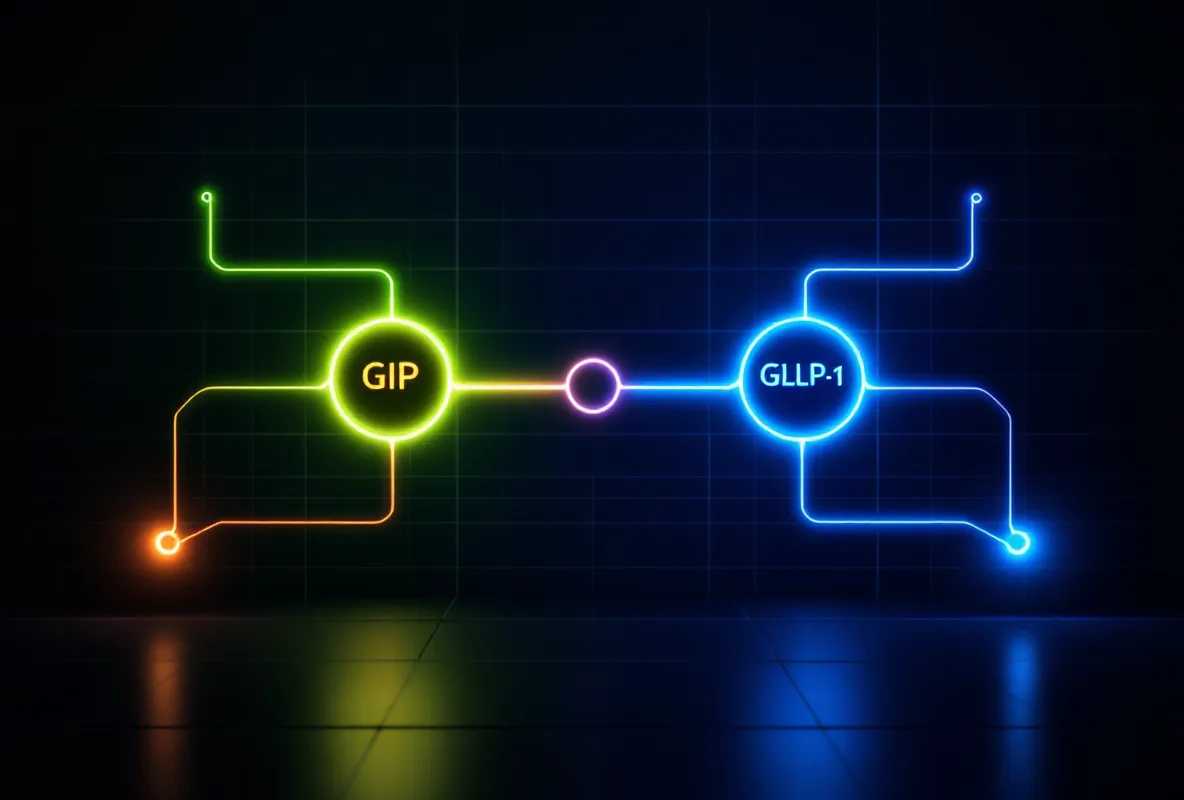
The two gut-hormone messages affect insulin and hunger
GIP and GLP-1 are two gut hormones, and each gives cells a different instruction. Tirzepatide can copy both, while GLP-1 helps hold food longer in your stomach and make hunger less sharp.
The GIP message: It prompts your pancreas to move insulin into your blood when sugar rises. It may also help body fat take sugar from the blood and store or use it.
The GLP-1 message: It also raises insulin and holds down glucagon, a hormone that lifts blood sugar. It keeps food in your stomach longer.
Scientists tested living cells kept in dishes and found the GIP message was stronger than the GLP-1 message [2]. GLP-1 still worked, but the dish test couldn't show how the mix affects you.
Inside those cells, a protein usually weakened the GLP-1 call. It didn't weaken tirzepatide's call, which may explain the added insulin seen in the dish.
The GIP and GLP-1 effects aren't a 50/50 split, and the paper didn't give a useful patient percentage. It only showed that the first message was stronger in the lab.
Tirzepatide adds a GIP message to GLP-1
Semaglutide is an older weekly shot that copies GLP-1, a gut hormone. Tirzepatide copies GLP-1 and adds a GIP message, named for the other gut hormone.
SURPASS-2 tested them in 1,879 adults with type 2 diabetes for 40 weeks, using semaglutide 1 mg. Researchers first asked if tirzepatide could match semaglutide. After it did, every tirzepatide dose lowered the blood sugar average by more [3].
Tirzepatide also led on weight by 1.9 kg, 3.6 kg, and 5.5 kg at 5, 10, and 15 mg. In SURMOUNT-5, weight loss was -20.2% with tirzepatide and -13.7% with semaglutide over 72 weeks [5].
A larger group result doesn't decide which drug fits you. Both GLP-1 drugs can cause nausea and bowel trouble, and both warn about tumors seen in one kind of thyroid cell in animals.
Tirzepatide research gives the full study account. You can also return to what's tirzepatide or see how the tirzepatide injection is given.